
Dental implants are one of the most advanced and reliable solutions for replacing missing teeth. They restore not only the appearance of your smile but also the function and strength of natural teeth. In this article, we will explain what dental implants are, how they work, and discuss their advantages and disadvantages.
What Is a Dental Implant?
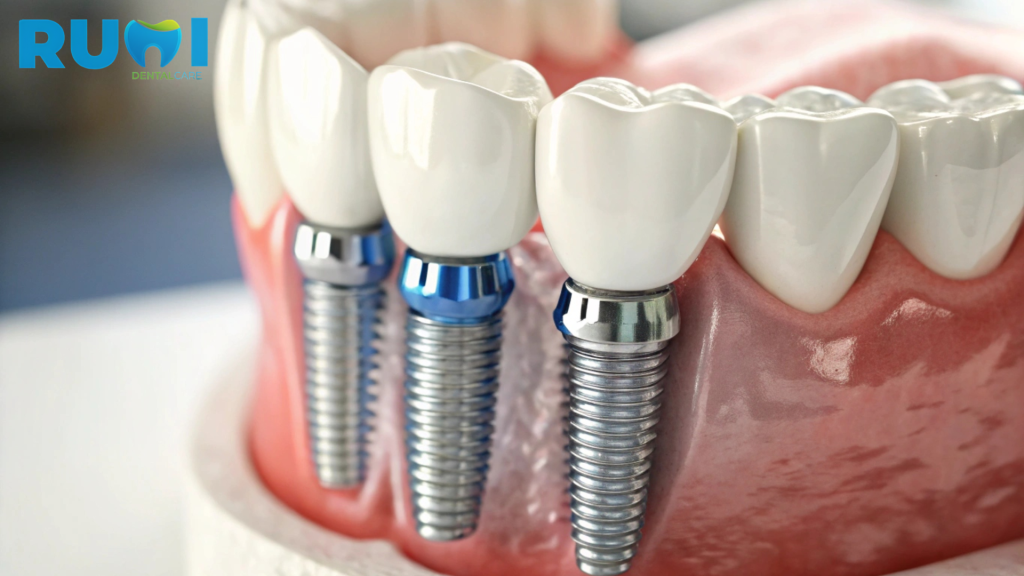
A dental implant is a titanium or zirconia post that is surgically placed into the jawbone to replace the root of a missing tooth. Once the implant fuses with the bone (a process called osseointegration), it supports a crown, bridge, or denture.
Dental implants are designed to look, feel, and function like natural teeth, making them a popular long-term tooth replacement option.
Parts of a Dental Implant
1. Implant Post
The implant post is placed into the jawbone and acts as an artificial tooth root.
2. Abutment
The abutment connects the implant post to the dental crown.
3. Dental Crown
The crown is the visible part of the tooth, custom-made to match your natural teeth.
How Does a Dental Implant Work?
After the implant is placed in the jawbone, it gradually bonds with the bone over several months. This creates a strong foundation. Once healing is complete, the abutment and crown are attached, restoring full chewing and speaking function.
Pros of Dental Implants
1. Natural Look and Feel
Dental implants closely resemble natural teeth in appearance and comfort.
2. Long-Lasting Solution
With proper care, dental implants can last 15–25 years or even a lifetime.
3. Improved Chewing and Speech
Implants function like real teeth, allowing you to eat and speak confidently.
4. Prevents Bone Loss
Implants stimulate the jawbone and help prevent bone shrinkage caused by missing teeth.
5. No Damage to Adjacent Teeth
Unlike dental bridges, implants do not require grinding down neighboring teeth.
6. High Success Rate
Dental implants have a success rate of over 95% when placed by a skilled dentist.
Cons of Dental Implants
1. High Initial Cost
Dental implants are more expensive upfront compared to bridges or dentures.
2. Surgical Procedure Required
Implant placement involves minor surgery, which may not suit all patients.
3. Long Treatment Time
The complete process can take several months due to healing time.
4. Not Suitable for Everyone
Patients with severe bone loss, uncontrolled diabetes, or heavy smoking habits may need additional treatment or may not be ideal candidates.
5. Risk of Complications
Though rare, complications such as infection, nerve damage, or implant failure can occur.
Who Is a Good Candidate for Dental Implants?
You may be a good candidate if you:
-
Have healthy gums
-
Have sufficient jawbone or can undergo bone grafting
-
Do not smoke heavily
-
Maintain good oral hygiene
Dental Implants vs Other Tooth Replacement Options
Dental Implants vs Dentures
-
Implants are fixed and stable
-
Dentures may slip and require regular adjustments
Dental Implants vs Bridges
-
Implants preserve jawbone health
-
Bridges rely on adjacent teeth for support
Are Dental Implants Worth It?
For many patients, dental implants are worth the investment due to their durability, comfort, and natural appearance. Although the cost and time involved are higher, the long-term benefits often outweigh the disadvantages.
Final Thoughts
Dental implants are a modern and effective solution for replacing missing teeth. Understanding their pros and cons helps you make an informed decision about your oral health. Always consult a qualified dentist to determine whether dental implants are the right option for you.